


 Taking out the drywall might make a rewiring project less complicated. The only problem is the stress it places on a homeowner.
Hence, it would be every homeowner’s dream to be able to rewire a house without wrecking the walls. But just to be clear, while this is possible, it still creates a minimal mess. A lot of factors play a role in this process.
- First, is the house an old home? If so, you should get an electrician who has the experience and interest in working on old houses. This is important because such electricians have the skill and patience to understand older buildings and upgrade outdated wiring without insisting on tearing the walls down.
- Next is the house infrastructure. Is it brick or frame? Are there plaster walls? Has the panel been updated recently? Is it a one-story or two? Is there a basement?
Some house wiring is easier to replace than others because of the construction. The wall outlets can be rewired from the attic in the case of a second floor or from the basement for the first floor. One-story houses are easier to rewire this way while two or three-story houses can be more complicated.
Steps Involved
- Plan and Prepare
A house rewire without tearing down the walls requires a professional electrician. This electrician will begin by having a detailed plan of the circuitry to be replaced. Preserving the drywall means running a lot of wires through an attic or available crawl space. The electrician will remove insulation from the walls and mark the points to remove any existing wires. - Remove the old wiring.
This can be a tricky situation because you can’t just pull the old cable from the walls. Your electrician will take precautions by switching off the breakers and disconnecting wires from them. Then the new wires can be taped to the old before pulling them out one at a time. This way, the new wiring can fall easily into place. - The new wiring
Cut an opening in the wall for each appliance on the circuit. Next, drill a ¾ inch hole under or over this opening. If the electrician has an assistant, it will be easy to feed the wires through these holes as work goes on.
It is important to secure the wires with staples or an appropriate clamp. Rewiring is a tough but necessary project for any home with outdated or unreliable wiring. Ensure you hire a professional electrician or contact us right here to make this project as simple as possible.
 When it comes to electrical components, installing them yourself may seem complex. But with the right tips and clear directions, you can get something done.
  We all know the sweet feeling of pulling out a clean, fresh, and dry clothing item from the electric dryer. At that moment when all that freshness and dryness touches your skin, you enjoy this often unrecognized pleasure of life.
 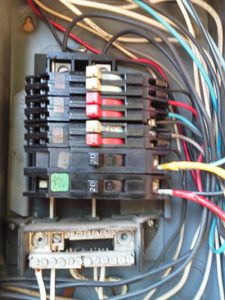 You are probably vaguely familiar with that scary big gray and black box in your basement or utility room. Most homeowners look to this box when they have a tripping breaker or sudden loss of power.
  When you are obsessed with pretty cars and tired of driving fuel powered vehicles, then an electric vehicle like
  A lot has changed with the way homes are built and
  Home wiring is something many homeowners often forget to consider with other home maintenance issues. This is not strange because home electrical wiring is usually tucked away behind the walls. Hence, as long as your outlets work and the lights come on, you won’t be thinking about the wiring behind it all.
  Chandeliers are valuable lights admired for the elegance and lighting quality they bring to a room. Any chandelier can add glamour and beauty to a home or even a commercial building. They come in various sizes, shapes, and designs. Some people believe that chandeliers are for high ceilings and dining rooms. A chandelier is actually quite versatile as it can be used in any part of the home and with both low and high ceilings.
  Rewiring is one of the most difficult, messy, and disruptive maintenance projects you can perform in the home. It is equally time-consuming and costly but very necessary. The lifespan of the electrical installation in a home is usually 25 years. However, this duration can vary depending on use. The electrical system will have to be inspected every 10 years if it is in a privately owned property or every 5 years for a rented property. This inspection guarantees electrical safety.
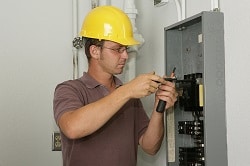 The words ‘electrical contractor and electrician’ are often used interchangeably. Many people do not know the difference between both but assume they mean the same thing. In this article, we will discuss what an electrical contractor does and how they are different from an electrician.